
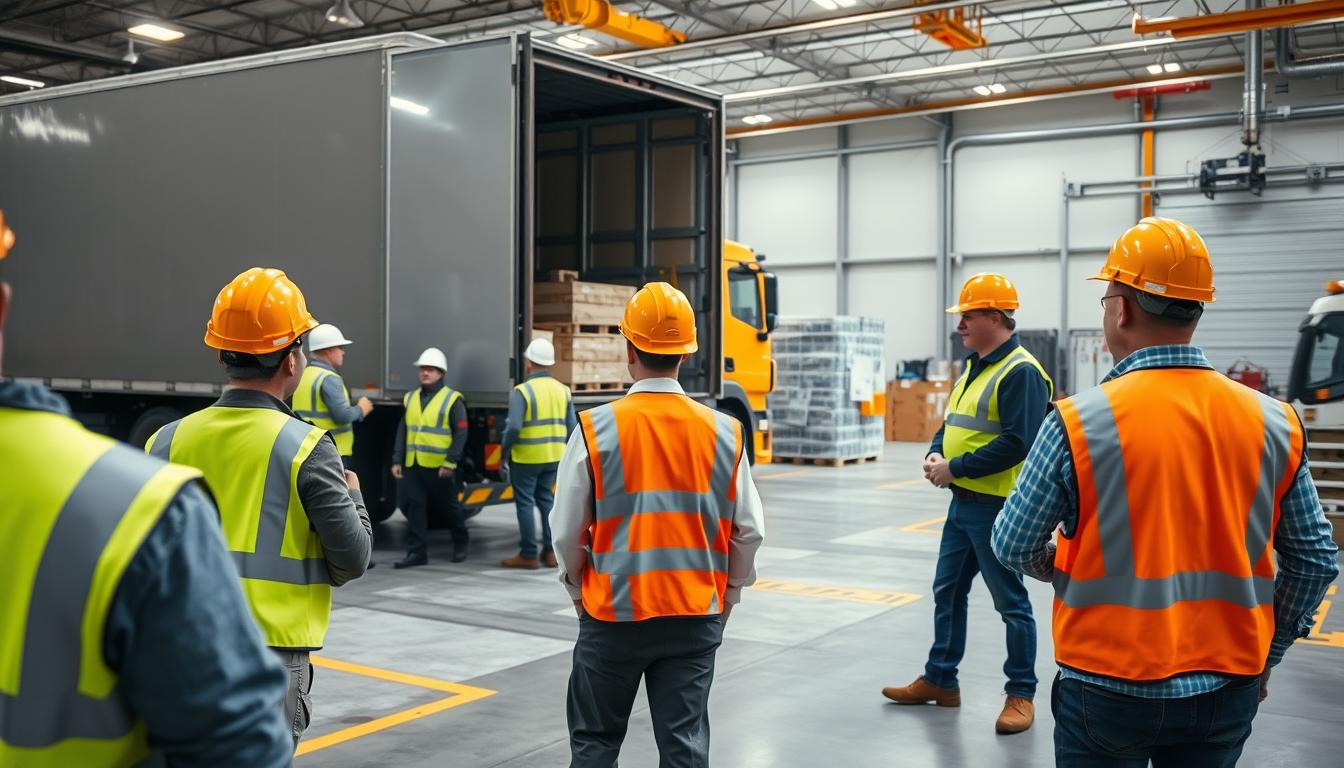
Production of Educational Films
At SimpleFrame we specialise in comprehensive production of educational films. They are an effective tool for the transfer of knowledge. We offer the entire range of services, from concept to post-production.
Educational film production is our passion and we treat every project with the utmost care. Thanks to many years of experience in the production of educational films, we are able to provide you with materials that really engage your audience.
Our approach combines didactic knowledge with filmmaking experience. As a result, we create materials that are valuable and engaging. We can help you realise your educational projects through video production.
Understanding the educational film production process is key. In this article, we provide comprehensive information on the subject.
As part of our activities in the production of educational films, we also offer consultations to help optimise the content. Each project is an individual challenge for us, and the production of educational videos is our speciality.
Key findings
- The comprehensive production of educational films includes planning, production and post-production.
- Our filmmaking experience and teaching expertise guarantee high quality material.
- Educational films are an effective tool for transferring knowledge.
- We offer a full range of film services, including video production.
- We carry out educational projects at various levels.
What is professional educational film production?
Producing educational videos requires a high level of commitment and accuracy. As experts in video production, we know that online educational videos i training videos are very important in modern teaching.
In the field of educational film production, our company has carried out many projects that have contributed to the effectiveness of training. It is worth emphasising that the production of educational films requires not only technical skills, but also a creative approach to education.
Educational videos cover a variety of topics. They can be school education, corporate training or instructional materials. Our definition includes the creation of videos that easily convey knowledge and skills.
Definition and aims of educational films
Educational films are audiovisual materials with a primary teaching purpose. Their purpose is not only to convey information, but also to ensure that the viewer understands the content.
The main objectives are:
- Communicating knowledge in a simple way
- Increasing audience involvement
- Enabling self-directed learning
- Standardisation of the knowledge provided
Differences between educational films and other video formats
Educational films are different from other productions. They have precisely defined learning objectives and a well thought-out narrative. The teaching methodology is key, determining how the content is presented.
| Features | Educational videos | Other Video Formats |
|---|---|---|
| Main objective | Transfer of knowledge and skills | Entertainment, Marketing |
| Narrative structure | Thoughtfully designed, adapted to teaching purposes | Variable, species-dependent |
| Teaching methodology | A key role in the production process | Inadequate or absent |
7 key benefits of investing in educational films
Investing in educational videos can significantly improve the effectiveness of training. At SimpleFrame, we know that good video content can significantly improve educational outcomes in organisations.
The high quality of our educational films is key. Every educational film production we make is carefully considered to meet the expectations of our clients.
When creating educational videos, we see many benefits. For example, the video format significantly increases knowledge retention in the audience. Studies show that video information is remembered 65% better than text.
Increased knowledge retention in audiences
Educational videos make content easier to understand and remember. With visual and audio elements, viewers can assimilate more knowledge faster.
Saving time in the training process
Our educational films allow time saving. Material that previously took hours can now be conveyed in a film of several minutes.
Standardisation of knowledge transfer
Another advantage is standardisation of knowledge. Each recipient receives the same consistent message. This eliminates the risk of information distortion.
Reusability of the material
Educational films can be used repeatedly. This significantly reduces the unit cost of training in the long run.
Reaching out to a wider audience
The video format allows reach a larger audience. Regardless of their location or time availability. At SimpleFrame, we make sure that the materials are precisely tailored to your target audience.
Producing educational videos at SimpleFrame is not only about creating content, but also a way to reach a wider audience. With our content, anyone can benefit from knowledge, regardless of location or time.
Creation and production of educational films - 8 stages in the process
At SimpleFrame, our educational video production process consists of eight key stages. This ensures the highest quality and didactic effectiveness of the final material. We begin with a detailed analysis of your organisation's needs.
We precisely define the target group.
Needs analysis and definition of the target group
The needs analysis and definition of the target group is a key step. It determines all subsequent production decisions. Our team works with you to understand your objectives and needs.
Setting learning objectives
Then, we set specific learning objectives with you. We define the knowledge and skills that the audience should acquire.
Development of the creative concept
The third stage is the development of the creative concept. Our specialists propose optimal visual and narrative solutions. These take into account the specifics of the content to be communicated.
Scenario development
The next step is to create a detailed script. It maps out the entire film. It defines the structure, dialogue, visual elements and interactions.
Pre-production and preparation
The pre-production stage involves comprehensive preparations for the recordings. Selection of locations, actors or presenters, preparation of graphics and animation.
Realisation of recordings
Making the recordings is an intensive process. Our film team captures all the planned scenes. We take care of the highest image and sound quality.
Post-production and editing
The final stage is post-production and editing. We transform the raw material into a coherent, dynamic and engaging educational film. We enrich it with professional animations, graphics and sound effects.
We provide you with full transparency at every stage. You can consult so that the final product perfectly matches your expectations. In this way, we deliver high quality online courses i educational content, that meet your needs.
5 elements of an effective script for an educational film
All stages of educational film production are carried out with attention to detail. From concept to completion, our educational film production is comprehensive and professional.
Creating a good script for an educational film requires attention to several important issues. We are experts in creating educational material. Our method is based on five key elements.
Clear narrative structure
It is important that the structure is logical. Our scenario always has a clear beginning of, development i termination. This makes the content easier to understand.
Language adapted to the audience
The language must be understood by the recipient. We create the message in such a way that it is understandable. We make sure that the terminology was understandable and precise.
Balance between theory and practical examples
The balance between theory and practice is important. Abstract concepts are shown with examples. This helps to better understand and remember the content.
Stopping points and summaries
Stopping points and summaries are key. They allow the recipient to organise knowledge. This is important in the learning process.
Elements involving the viewer
Elements such as questions or tasks engage the audience. This makes the material more effective.
| Scenario element | Description | Benefits |
|---|---|---|
| Clear narrative structure | Logical layout of content | Facilitates understanding and memorisation |
| Language adapted to the audience | Precise terminology | Increases understanding of content |
| Balance between theory and examples | Illustrating abstract concepts | Improves teaching effectiveness |
| Stopping points and summaries | Organisation of acquired knowledge | Facilitates memorisation |
| Elements involving the viewer | Activation of the recipient | Increases commitment |
High image and sound quality is crucial. Careful editing and colour correction contribute to the quality of the footage. Everything together creates an effective script.
6 types of educational films and their use
Among the educational films, there are many different types. Each is tailored to different educational needs. In our work, we create six basic types of films that have their own unique uses.
Filmed lectures
Filmed lectures are professional recordings by experts. They are rich in graphic elements and editing. They are ideal for teaching at universities and specialised training courses.
Instructional tutorials
Instructional tutorials show how to do something step by step. They allow you to complete tasks on your own. They are key in product and technique training.
Animated concept presentations
Animated presentations are visualisations of complex ideas. They are great for scientific learning and business presentations.
Interactive simulations
Interactive simulations allow decision-making. This increases engagement and learning efficiency.
Educational documents
Educational documentaries combine documentary film with didactics. They show the wider context of the issues discussed.
Video microlensing
Video microlectures are short learning materials. They are ideal for ongoing learning and microlearning.
| Type of educational film | Application | Characteristics |
|---|---|---|
| Filmed lectures | Academic education, expert training | Professional registration of expert speeches |
| Instructional tutorials | Product and technical training | Step-by-step presentation of procedures |
| Animated concept presentations | Science education, presentation of business strategies | Visualising abstract ideas |
| Interactive simulations | Interactive learning | The possibility for the viewer to make decisions |
| Educational documents | Presentation of the wider context of the issues | Combination of documentary with didactic layer |
| Video microlensing | Mobile learning, microlearning | Short, focused materials |
At SimpleFrame, we help you choose the best type of educational video. We make every effort to ensure that the content is tailored to your needs and target audience.
Equipment and tools for professional educational film production
Producing educational films requires state-of-the-art equipment and software. At SimpleFrame, we have comprehensive equipment. This enables us to deliver projects to the highest standard.
In our work in educational film production, we use modern tools that enhance the quality of the final material. Educational film production requires investment in equipment and we provide the right support at every stage.
Cameras and video recording systems
We use 4K cameras with exceptional sharpness. This is crucial when creating detail in tutorials and presentations.
Lighting systems
Our lighting includes classic sets and LED panels with adjustable colour temperature. This allows us to precisely adapt the light to the needs of the recording.
Audio equipment
Sound quality is important. That is why we use professional condenser microphones and wireless systems. This ensures clear sound, crucial in educational material.
Editing and post-production software
In post-production we use non-linear assembly software, colour correction and the creation of animations. We have tools for creating interactive elements in films.
Professional image and sound production, as well as accurate editing, contribute to the quality of the material. Our technical team is constantly updating its knowledge of new technological developments. This enables us to offer you innovative educational productions.
Budgeting for educational film production - 4 key areas
Managing budgets in educational film production is an art. A balance has to be found between quality and cost. As experts, we emphasise the importance of proper financial planning.
Budget control in educational film production is key. This enables us to deliver projects that bring tangible benefits to our clients.
A well-planned budget is the basis for effective project management. It also ensures an optimal quality/cost ratio.
Pre-production and planning costs
Pre-production costs include concept development, research, script and storyboard creation. This stage is crucial to the success of the project. Precise planning avoids expensive changes.
We help you with your planning, offering professional support at every stage.
Expenditure on equipment and production crew
Equipment and crew expenses are the largest part of the budget. They include equipment hire, salaries for the technical crew and actors. At SimpleFrame, we offer flexible solutions.
Post-production budget
The post-production budget is editing, colour correction, animation and special effects. This stage is crucial to the quality of the material. Our experienced team takes care of every detail.
Distribution and promotion costs
Distribution and promotion costs are an important part of the budget. They include adaptation of material, translation and promotion. We help you plan your budget optimally to save money without affecting quality.
10 techniques for engaging audiences in educational films
Making educational films is not just about imparting knowledge. It is also important to keep the viewer's attention and stimulate their activity. At SimpleFrame, we use ten proven techniques that significantly increase audience engagement.
All the techniques used in the production of educational films are aimed at increasing the effectiveness and engagement of the audience. They make our educational films truly attractive.
Storytelling and narrative building
Storytelling is a powerful educational tool. Storytelling allows information to be put into context. This increases their assimilation and memorisation.
Use of problem questions
Asking questions makes the viewer think. Problem questions They activate the recipient. They encourage them to seek solutions.
Visualisation of data and concepts
Visualising complex data and concepts makes them easier to understand. Our graphics and animation help to present even the most complex issues in an accessible way.
Interactive elements
Interactivity interrupts the passive reception of content. Elements such as surveys, quizzes or tasks to be performed involve the viewer in actively processing information.
Humour and emotion in the message
Appropriately dosed humour i emotions increase the attractiveness of the educational material. They build positive associations with the knowledge presented.
Examples from everyday life
Illustrating theory with examples from everyday life facilitates understanding. Remembering abstract concepts becomes easier.
Use of metaphors and analogies
Metaphors and analogies help to clarify complex issues. They refer to phenomena familiar to the recipient.
Change of pace and dynamics
Conscious handling of narrative pace counteracts monotony. Maintains optimum level of cognitive stimulation.
Engaging presenter/lecturer
Presenter or lector With appropriate diction and charisma builds rapport with the audience. Increases the credibility of the message.
Summaries and calls to action
Audience activation in educational film production is key. At SimpleFrame we focus on interactivity and engagement to make our productions effective.
Regular summaries i calls to action structure knowledge. They motivate the viewer for practical application.
All these techniques, skilfully integrated in the production process, create educational material. They effectively engage the viewer in the learning process.
The 7 most common mistakes in educational video production
In our work with educational videos, I was aware of several mistakes. These mistakes can reduce the effectiveness of the materials. As a result, we know how to create videos that teach effectively.
Information overload
Too much content in one place can overdo it. That's why we focus on the important points. We show them in a simple way.
Ignoring the needs of the target group
If the material doesn't fit the audience, it's no good. We always analyse who is supposed to watch our film. In doing so, we create training video perfect for them.
Poor sound quality
When following a film with loud interference, it is difficult to understand the content. We make sure we have the best sound. We want the audience to listen easily.
Too long sequences without change
Long passages with no changes can be discouraging to watch. In our films, we change the frame and visual elements frequently.
No clear structure
If the material is not organised, it is difficult to understand. Our films have clear divisions into sections. Each has an introduction and a summary.
Inadequate narrative pace
The pace must fit the content and the audience. This makes the material easier to absorb.
Neglecting the testing phase
Testing is the key to good material. In our work, we always test the film with the audience.
| Error | Description | Solution |
|---|---|---|
| Information overload | Too much content in a short space of time | Focus on key issues |
| Ignoring the needs of the target group | Mismatch between material and audience expectations | Detailed analysis of the target group |
| Poor sound quality | Audio interference and unclear voiceover | Providing superior sound quality |
| Too long sequences without change | Decrease in attention and engagement | Dynamic change of frames and visual elements |
| No clear structure | Difficulties in understanding the material | Clear division into thematic sections |
| Inadequate narrative pace | Overloading or discouraging the recipient | Adapting the pace to the target group |
| Neglecting the testing phase | Problems before final implementation | Conducting tests with a representative group |
5 ways to measure the effectiveness of educational films
Evaluating the effectiveness of educational videos is key. At SimpleFrame, we recommend five evaluation methods. These allow an accurate assessment of their effectiveness.
Knowledge tests before and after viewing
Knowledge tests before and after watching an educational video help us understand how much knowledge people have gained. They give us data on the effectiveness of the material.
Analysis of audience engagement and retention
Analysing viewer engagement and retention gives information about what viewers are interested in. The analytical tools of streaming platforms are very helpful here.
Audience opinion and satisfaction survey
Audience opinion and satisfaction surveys provide insight into the audience's experience. Surveys and interviews are extremely valuable here.
Measurement of business indicators
Measuring business metrics allows you to assess the impact of your learning materials on your business. This is key to understanding their value.
Long-term evaluation of knowledge transfer
Long-term evaluation of knowledge transfer checks whether the skills acquired are sustainable. Follow-up studies after a few weeks or months are key here.
| Evaluation method | Description | Benefits |
|---|---|---|
| Knowledge tests | Tests before and after watching the film | Precise measurement of knowledge gain |
| Engagement analysis | Analytical tools for streaming platforms | Valuable information on audience retention |
| Opinion poll | Surveys and interviews | Qualitative insight into user experience |
| Measurement of business indicators | Cost reduction, increased efficiency | Assessment of the real impact on the organisation |
| Long-term assessment | Follow-up studies | Verification of the sustainability of educational outcomes |
Using these five methods allows for a comprehensive evaluation of educational films. This allows us to continuously improve our video training and offer the best solutions to our customers.
Examples of the use of effective techniques in the production of educational films demonstrate the importance of tailoring content to the needs of the audience.
Trends in educational film production for 2023
At SimpleFrame, we are always following the latest trends in online educational videos. We want to provide our customers with the best solutions. Production educational multimedia is a complex process. It requires the latest technology and methods.
Producing educational films at SimpleFrame is not just about making projects, but also about constantly striving for innovation. We follow trends and use them in our work.
The educational film market is changing rapidly. By following trends, we create materials with innovation. We respond to the changing expectations of audiences.
Microlearning and short formats
Microlearning and short formats are becoming increasingly popular. Audiences have less time for attention and want easy access to knowledge. We create series of short, focused materials.
VR and AR technologies in education
VR and AR technologies are changing education. They enable immersive experiences. Our team produces 360° content and AR applications.
Personalisation of educational content
Personalisation of educational content is the key to success. With advanced algorithms and adaptive learning paths, we tailor the material to the needs of the audience.
Social learning through video
Social video learning is gaining ground. It combines video education with social interaction. We create materials that stimulate discussion and collaboration.
Integration with learning management systems
Integration with learning management systems (LMS) facilitates the integration of video into learning environments.
By introducing new trends in educational film production, we aim to provide our clients with cutting-edge solutions.As industry leaders, we embrace the challenges of new technologies.
| Trend | Description | Benefits |
|---|---|---|
| Microlearning | Short, focused materials | Flexible access to knowledge |
| VR/AR | Immersive learning experiences | Increased knowledge retention |
| Personalisation | Adaptation to individual needs | Improved learning outcomes |
Conclusion: Professional production of educational films as a strategic investment
Our experience in the production of educational videos allows us to offer clients comprehensive solutions that support their business goals.
Professional educational videos are crucial for the development of companies. As experts, we see them as tools to increase the effectiveness of training. Through them, knowledge is better transferred and standardised.
Our approach ensures films that are valuable and engaging. They are tailored to the expectations of the audience. There are tangible business benefits from investing in such videos. For example, new employees are introduced more quickly, training costs are reduced and knowledge lasts longer.
The products we offer for the production of educational films are designed with long-term effects in mind. Our films are tools that support the development of companies.
In this age of digital transformation, high-quality videos are essential. Feel free to contact us to discuss how our content can support your company's training goals.
Contact us: +48 502 061 431 or kontakt@simpleframe.pl.
FAQ
Everything we do in the production of educational films is aimed at providing valuable content that engages audiences.
What are the main advantages of educational film production?
What stages does the educational film production process involve?
What types of educational films do you produce?
How is the effectiveness of educational films measured?
What trends are you seeing in educational film production?
Our observations in the production of educational films show the importance of adapting content to market needs. At SimpleFrame, we always focus on innovation.
What are the most common mistakes in educational film production?
What tools and technologies do you use to produce educational films?
Do you offer personalisation of educational content?
How can I contact you about the production of educational films?
We are open to collaboration and educational film production is our speciality. Feel free to contact us!