Animation production
Animation production At Simple Frame, we offer a comprehensive process for creating modern and engaging animated forms tailored to the needs of brands, institutions, and creators. We carry out projects from the initial idea and creative concept, through the script and storyboard, to 2D/3D animation, motion design and final post-production. With over 20 years of experience, we combine aesthetics, narrative and modern technologies to create animations that attract attention, clearly convey content and enhance visual communication. Our goal is to create dynamic, visually refined animations that are ready for use in digital media, advertising campaigns and image projects.
Comprehensive animation production — when experience counts
Animation has long ceased to be associated solely with children's films. Today, it is used wherever an attractive form of communication, the ability to show complex processes, and effectively attracting the audience's attention are important. It is effective in marketing, as well as in education, industry, medicine, and the technology sector. A well-prepared animation can explain a topic that would take several pages of text to describe, in just a few dozen seconds.
At Simple Frame, we specialise in the end-to-end production of animations — from the initial concept right through to the finished product. We're working on the concept, preparing the script, creating the storyboard, designing the visual layer, producing 2D and 3D animations, and handling post-production. Each project is created with a specific goal in mind, which is why we always adapt visual solutions and narration style to the target audience and brand identity.
Over twenty years of experience has taught us that good animation isn't solely about looking impressive. The clarity of the message, appropriate pacing, and the ability to present information in a memorable way are equally important. It is precisely this fusion of aesthetics, technology, and thoughtful narrative that makes animation an effective communication tool.
Animation is much more than entertainment
Just over a decade ago, animations were mainly associated with films and TV series. Nowadays, their applications are considerably broader. Production companies, universities, public institutions, advertising agencies, developers, device manufacturers and companies operating in technical industries are all using them.
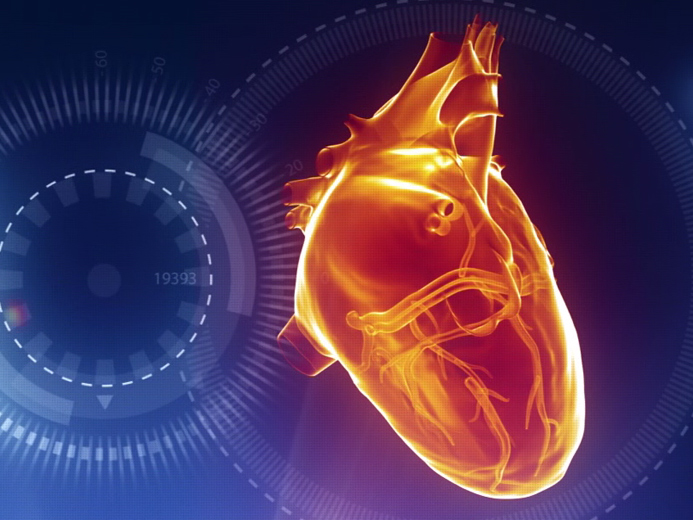
This is no accident. There are issues that cannot be shown with a camera, or filming them would be very expensive. Animation allows for the presentation of the inside of a machine during operation, the course of chemical reactions, processes occurring in the human body, or the functioning of industrial installations – thanks to this, the viewer receives a clear and understandable picture of even very complicated phenomena.
This is why animations increasingly appear in training materials, product presentations, advertising campaigns, and companies' internal communications. In many cases, they prove to be much more effective than traditional film.
What does animation production look like?
Every project runs a little differently, but the entire process can be divided into several stages. The first of these is understanding the client's needs and defining the goal the animation is to achieve. Based on this, a concept and script are created, which form the foundation of the entire production.
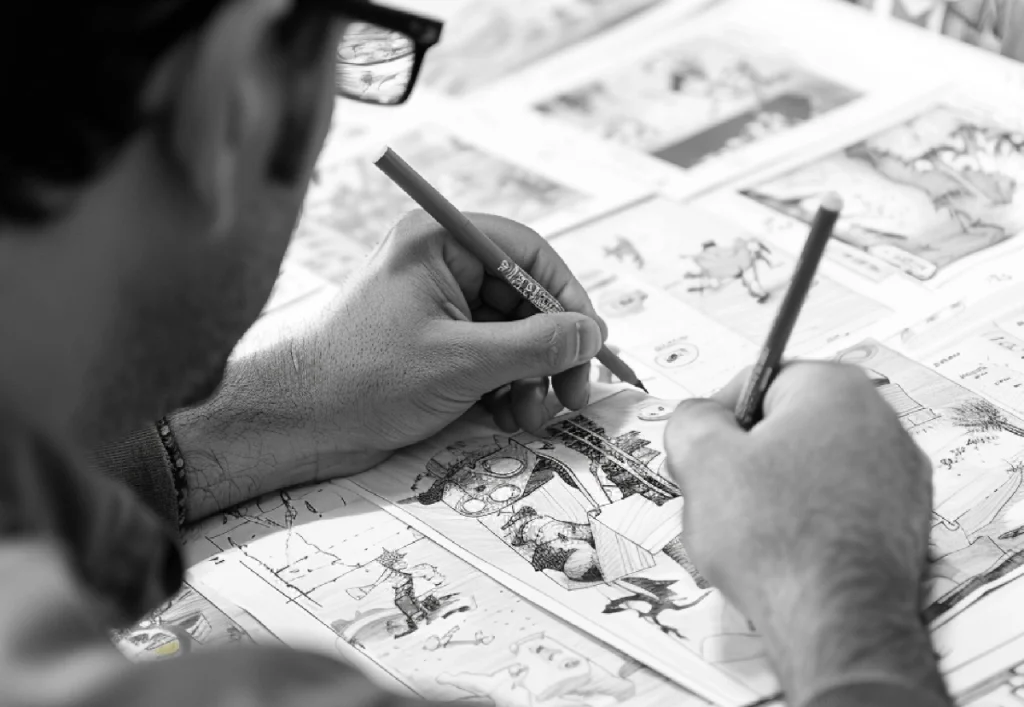
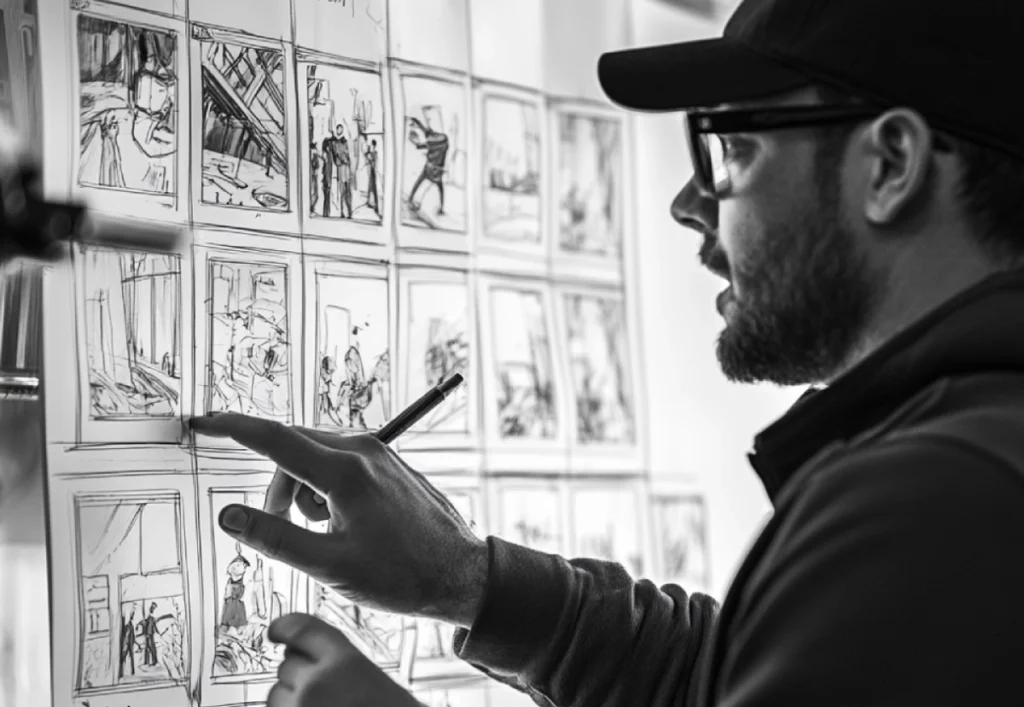
The next step is to prepare a storyboard. This is a simplified design showing the flow of subsequent scenes. Thanks to it, even before the start of the actual production, the narrative pace, the arrangement of shots, and the way key information is presented can be checked.
Once the storyboard has been approved, the graphic work begins. Depending on the nature of the project, either 2D illustrations or 3D models are created. This is also the stage where the style of the entire production is determined – the colour scheme, the appearance of characters, environmental elements, and all objects that appear in the animation.
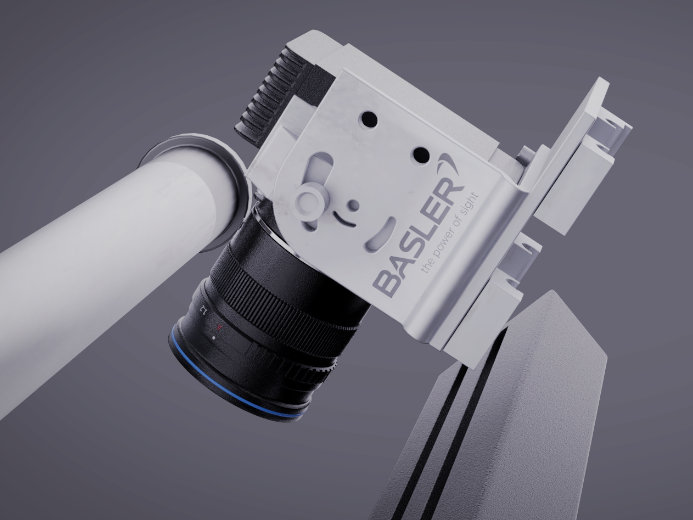
Only then does the actual animation begin. Individual elements are set in motion, transitions between scenes are created, and the whole piece gradually gains the appropriate pace. Once the animators have finished their work, the material goes to editing and post-production. Music, sound effects, voice-overs, or subtitles are added, and then rendering is performed, which is the preparation of the final video file.
Although from a viewer's perspective the entire process seems simple, behind every minute of finished animation lie many hours of work by specialists responsible for various elements of the project.
Why do companies choose animation?
Animation allows information to be presented in an organised and visually appealing way. This is particularly important when a product or service requires further explanation. Instead of a long description, the entire process can be shown step by step, using visuals, movement, and sound.
Such materials are well-suited for sales presentations, websites, social media, and trade fairs. They are also increasingly used in employee training, user manuals, and investor materials.
A properly prepared animation not only grabs the audience's attention. It also helps to organise information, increases comprehension of the message and makes it easier to remember the most important content. This is precisely why it is used by both large enterprises and smaller companies building their recognition on the market.
Types of animation
Although many people divide animation solely into 2D and 3D, in practice there are many more possibilities. The choice of the right technique depends on the project's objective, target audience, budget, and the effect we want to achieve. Not every production requires photorealistic 3D models. Sometimes a simpler form can communicate information more quickly and effectively.
Alongside classic 2D and 3D animation, solutions such as stop motion animation, frame-by-frame drawn animation, and motion design based on animating graphic elements are also used. Some projects also feature recordings with actors supplemented by animated graphics or special effects.
Each of these techniques has its strengths. Therefore, before starting work, it is worth considering what character the finished material should have and what purpose it should serve.
2D animation
Two-dimensional animation is one of the most recognisable forms of animation. It is based on illustrations created in two dimensions, which is why it stands out with a simpler, more graphic aesthetic. Despite technological advancements, it remains a very popular solution used in both advertising and educational materials.
Until recently, most 2D animation was created by hand-drawing subsequent frames. The process is different now – animators use computer programmes that streamline their work, but the fundamental principle of creating movement remains similar.
Find out more about 2D animation
This type of animation works well wherever a simple message, clear graphics and a relatively short turnaround time are important. It's no surprise that it's often used for promotional videos, explainer videos, training materials, or publications intended for social media.
3D animation
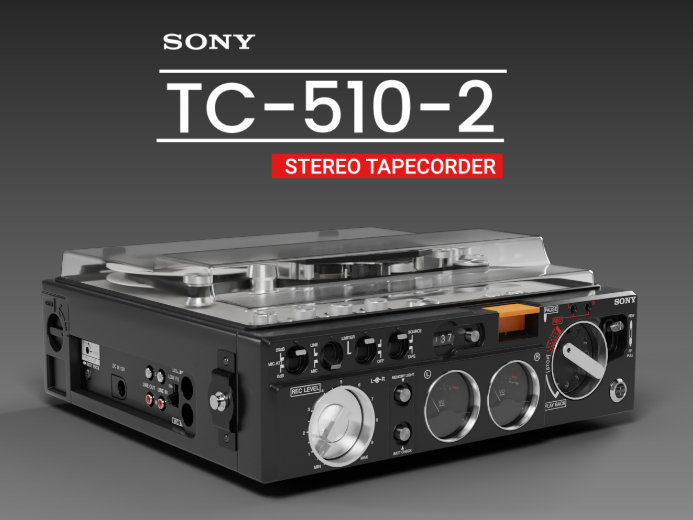
Three-dimensional animation offers significantly greater possibilities in terms of depicting space, light, and movement. The models have depth, allowing them to be viewed from different perspectives, and the whole effect is more realistic.
Work on 3D animation begins with the creation of character or object models. Materials, textures, lighting, and motion animation are then added. Only at the end is the whole thing rendered into the form of a finished film.
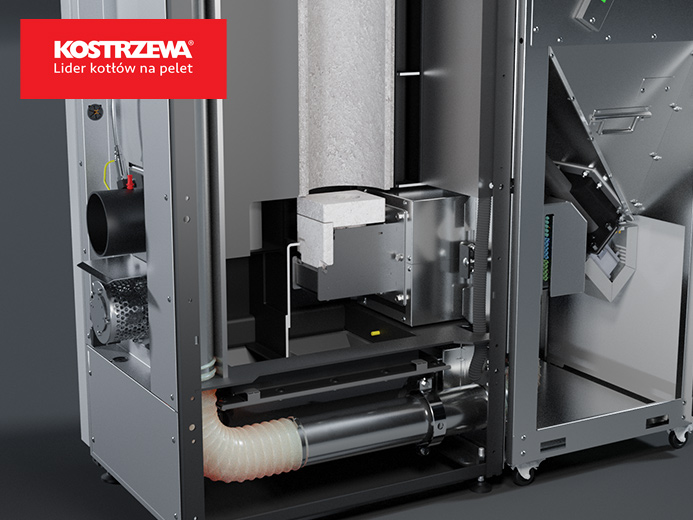
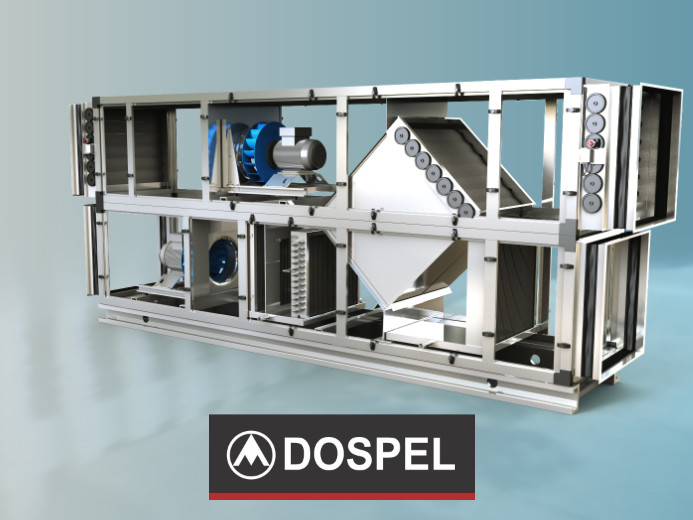
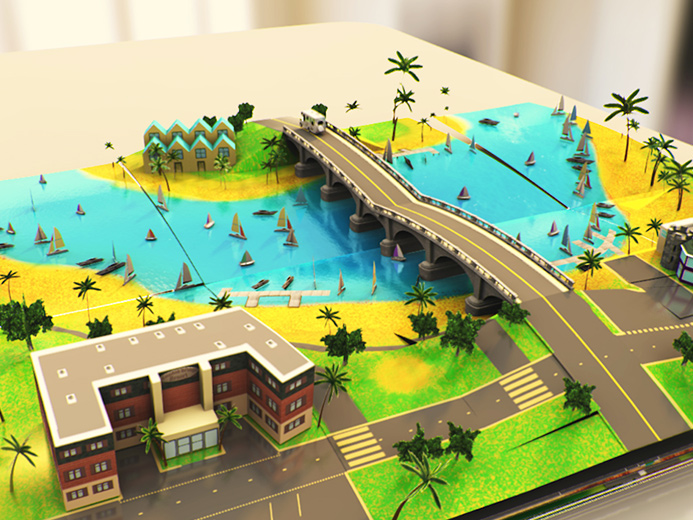
This solution is often chosen by device manufacturers, industrial companies, design offices, or developers. 3D animation allows for the presentation of a product before it's made, to show the inside of a machine without disassembling it, or to illustrate the operation of a mechanism that couldn't be captured by a camera.
Kiedy wybrać animację 2D, a kiedy 3D?
There is no single answer to this question. It all depends on the nature of the project and the effect we want to achieve.
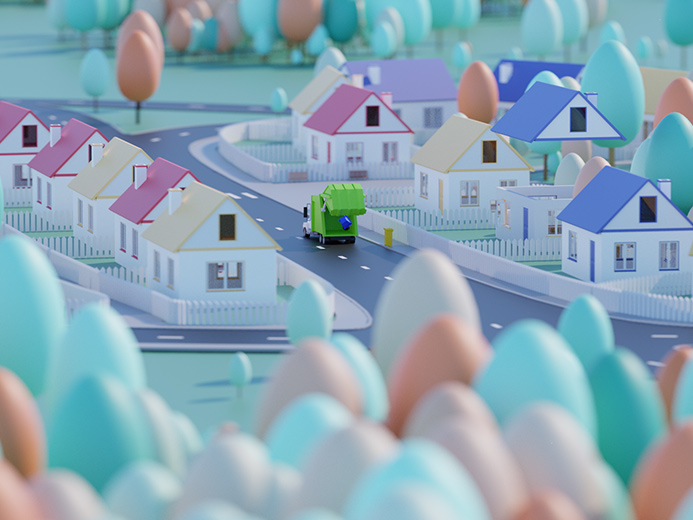
If a clear message, dynamic form, and legible information are paramount, 2D animation often proves to be the best choice. Conversely, projects requiring a realistic representation of a product, device interior, or technological process are far better suited to 3D technology.
Increasingly, both solutions are being combined. A single production might feature both 2D illustrations and three-dimensional elements or animated infographics. This makes it easier to match the film's style to its purpose.
How is an animated film made?
Every animation has its beginning even before the first graphics or 3D models appear. The starting point is a discussion about the project's goal. A promotional film for a new product is planned differently from training material or an animation explaining a complex technological process.
Based on the information gathered, a script is created. This is not merely a description of subsequent scenes, but a plan for the entire narrative. It determines the film's pacing, how the audience is guided, and the most important messages that are to be remembered.
The next stage is storyboarding. Thanks to this, you can see the layout of scenes even before the actual production begins. This allows you to spot any potential problems and make changes without having to correct the finished animation.
Once the concept is approved, graphic work begins. Depending on the chosen technology, illustrations, 3D models, and all elements that will later be used in the film are created. Simultaneously, the colour scheme, style, and appearance of characters and the environment are developed.
The most time-consuming part of the project is the animation. It is at this stage that the static graphics come to life, and the whole story begins to flow. Every movement requires precise planning, which is why even a short film can take a team of animators many days to complete.
Post-production remains at the end. Sound effects, music, a narrator, subtitles, and final edits are added. Only after rendering are all the elements combined into a single piece ready for broadcast on a website, social media, during a presentation, or an advertising campaign.
Animation production at Simple Frame
We treat every project individually, as there is no single template that works in every industry. An animation prepared for a machinery manufacturer looks different from training material for employees, and a video promoting a new service looks different again. Therefore, the first step is always to understand the client's needs and the objective that the final production is intended to achieve.
Only after establishing the most important assumptions do we select the execution technique, plan the workflow, and prepare the scenario. This helps to avoid random decisions at later stages of implementation and ensures that all elements will form a cohesive whole.
Every project has its own character
We don't limit ourselves to a single animation style. Depending on the needs, we use 2D animation, 3D models, motion design, or combine several techniques in one piece. This approach provides much greater freedom during design and allows us to better tailor the film to the audience.
The nature of the industry is also very important. Projects carried out for industry or energy require a completely different approach than marketing animations or educational materials. We always try to find a solution that is both visually attractive and clear for the recipient.
Client collaboration at every stage
Animation production doesn't end once the initial graphic designs are ready. We maintain constant contact with the client, consulting on subsequent stages of production. This ensures that all key decisions are made on an ongoing basis, and the final material aligns with prior agreements, thereby reducing the number of revisions at the end of the project. The client sees how the animation is progressing right from the start, allowing them to provide feedback even before the next production stages begin.
The quality of animation is influenced by several factors. These include the skill and experience of the animators, the sophistication of the animation software and hardware used, the time and budget allocated to the project, and the artistic direction and style of the animation. The level of detail in character design, the fluidity of motion, the expressiveness of the characters, and the overall visual appeal all contribute to the perceived quality.
The final effect does not depend solely on the animator's skill. The script, pacing, appropriate graphics, and how the audience is guided through the entire story are equally important. Even the best visual presentation will not fulfil its role if the message is unclear.
Scenario and storytelling method
A good animated film should lead the viewer step by step. Information must appear in the correct order, and the whole should be easy to understand during the first viewing. That is why script preparation is one of the most important stages of the entire project.
Graphic design
The visual layer is responsible not only for the film's aesthetics but also for its clarity. The choice of colours, icons, illustrations, or 3D models should support the message, not distract from it. Sometimes, a minimalist graphic proves to be the best solution, while other times, a project requires more elaborate visualisations.
Sound and editing
Music, sound effects and the narrator often determine how an animation is perceived. A well-matched soundtrack can emphasise emotions, aid understanding of the message and give the entire piece the right pace.
Assembly also remains equally important. It is at this stage that all the elements are brought together into one cohesive story.
Animacje są wykorzystywane w wielu dziedzinach, w tym: * **Rozrywka:** Filmy animowane, seriale telewizyjne, filmy krótkometrażowe, gry wideo. * **Edukacja:** Pomoc wizualna w materiałach edukacyjnych, animowane wyjaśnienia konceptów, cyfrowe podręczniki. * **Reklama:** Spoty reklamowe, animowane banery internetowe, prezentacje produktów. * **Web design i interakcja użytkownika:** Animacje interfejsu, przejścia stron, wskaźniki postępu, przyciski interaktywne. * **Sztuka i kultura:** Animacja artystyczna, instalacje multimedialne, animowane teledyski. * **Nauka i medycyna:** Wizualizacje złożonych procesów naukowych, symulacje medyczne, prezentacje danych. * **Prezentacje biznesowe:** Animowane wykresy, grafiki, wprowadzenia do prezentacji. * **Wirtualna rzeczywistość (VR) i rozszerzona rzeczywistość (AR):** Tworzenie dynamicznych i angażujących środowisk. * **Oprogramowanie:** Animowane ikony, tutoriale, elementy interfejsu.
The possibilities for using animation are much greater today than just a few years ago. Such materials can be encountered on the internet, as well as at industry events, training sessions, or sales presentations.
Animations are most often used for:
- product and service presentations,
- explanations of technological processes,
- Training materials,
- advertising campaigns,
- internal communication in companies,
- education,
- presentation of investments and architectural projects,
- visualisations for industry and energy.
In many cases, animation allows us to show things that cannot be captured by a camera or would be too expensive to film. For this reason, it finds application in technical, medical, and scientific industries, where precise presentation of even very complex issues is important.
Why is it worth commissioning animation production from a professional studio?
Preparing a short animation might seem like a simple task, but behind the finished product lies the work of many specialists. Screenwriters, graphic designers, animators, editors, and sound designers all participate in the project. Each of them is responsible for a different element that influences the final outcome.
A professional studio has not only the appropriate technical facilities but also the experience gained from completing numerous projects. This makes it easier to select an animation technique, avoid errors during the production stage, and prepare material that will effectively meet the intended communication goals.
A well-executed animation remains relevant for a long time. It can be used on a website, social media, during client meetings, trade fairs, or advertising campaigns, which is why for many companies it represents an investment that works for the brand's image for years to come.

How much does it cost to produce an animation?
The price depends on various factors, including the length of the film, the chosen technique, the number of scenes, and the complexity of the project. Each production is priced individually after understanding the scope of work and the client's expectations.
How long does project implementation take?
The timeframe depends on the nature of the animation and the number of stages requiring approval. Simpler videos may be completed within a few weeks, whereas more complex productions require correspondingly more time.
Is 2D animation cheaper than 3D?
Not always. Although 2D animations often require less effort, the final cost depends on many project elements. It can happen that an elaborate 2D animation is more time-consuming than a simpler 3D visualisation.
What materials are needed to start a collaboration?
The most important thing is to define the film's objective and to convey information about the product, service, or technology. If the client has a brand identity guide, graphic materials, or technical documentation, it's also worth sharing them at the start of the project.
Yes, we help prepare scripts.
Yes. Script development is one of the stages of our work. We prepare the film's structure, propose a way to present information, and ensure that the whole is understandable for the audience.
Can animation be realised purely using 3D technology?
Yes. Many projects are created solely as three-dimensional animations. Everything depends on the purpose of the film and the desired visual effect.
Gotowe animacje można wykorzystać w wielu miejscach. Oto kilka przykładów: * **Materiały marketingowe i promocyjne:** * **Reklamy online:** Banery, reklamy wideo na platformach takich jak YouTube, Facebook czy Instagram. * **Strony internetowe:** Jako elementy przyciągające uwagę, animowane logotypy, prezentacje produktów, sekcje "o nas". * **Social media:** Krótkie klipy, animowane posty, intro/outro do profili. * **Prezentacje i Pitch Decki:** Aby uczynić je bardziej dynamicznymi i angażującymi. * **Edukacja i szkolenia:** * **Kursy online:** Do wyjaśniania skomplikowanych koncepcji, procesów czy instrukcji. * **Materiały dydaktyczne:** Animowane filmy edukacyjne dla dzieci i dorosłych. * **Webinary:** Jako dodatkowy element wizualny do uatrakcyjnienia prezentacji. * **Rozrywka i media:** * **Filmy krótkometrażowe:** Jako części większej produkcji lub jako samodzielne dzieła. * **Gry wideo:** Animowane elementy interfejsu, efekty specjalne, intro. * **Animowane GIF-y:** Do użytku w komunikatorach, e-mailach czy na forach internetowych. * **Prezentacje wewnętrzne w firmie:** * **Szkolenia pracowników:** Wprowadzanie nowych procedur, informacji o produktach. * **Raporty i podsumowania:** Wizualizacja danych w bardziej przystępny sposób. * **Aplikacje mobilne i strony internetowe:** * **Elementy interfejsu użytkownika (UI):** Animowane ikony, przejścia, wskaźniki ładowania. * **Onboarding:** Krótkie animowane poradniki dla nowych użytkowników. * **Materiały informacyjne:** * **Infografiki animowane:** Do wyjaśniania danych statystycznych, procesów czy historii. * **Artykuły blogowe:** Jako elementy wizualne urozmaicające treść. Wybór konkretnego miejsca zależy od rodzaju animacji, jej celu i docelowej grupy odbiorców.
The film can be published on a website, social media, at trade fairs, conferences, sales presentations, and in training and advertising materials.
Will animation work in technical industries?
This is one of the most common applications of this technology. Animations allow the operation of devices, technological processes, and installations to be shown in a way that cannot be achieved using traditional film.
Does the client influence how the project is carried out?
Each stage of the project is consulted, and the client approves subsequent elements before the next works begin.
Why choose Simple Frame?
We combine many years of experience with a modern approach to animation design. We prepare each project individually, selecting the technology and implementation method according to the client's needs and the nature of their business.
Free quote
Get in touch with us! 👋🏼