
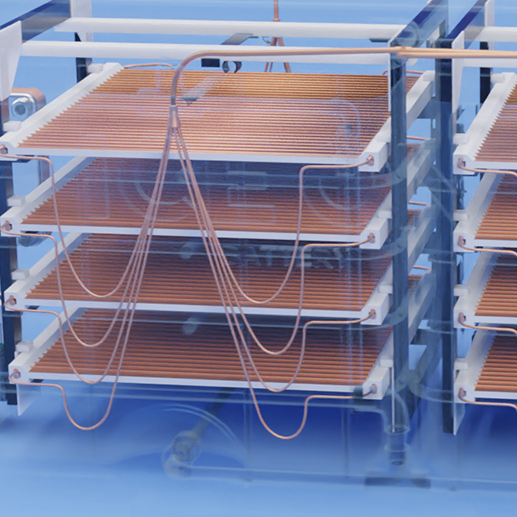
Promote interestingly and effectively a new product or service.
Show the most relevant functions, the greatest advantages, individual characteristics.
And above all, illustrate the benefits that result from owning these products.
Product animation has the most possibilities and the greatest potential of all other forms of marketing and advertising. This makes it ideal for promoting products and services in any industry. Unlike film, with animation we can show everything. What is more, show in any style, in any climate, in any character. We can create our own world, reality, shapes, people. There are no restrictions or impositions. The only limitation is the equipment and the skills of the graphic designers.
From a cartoon for children to projects for major companies
The first was a children's cartoon, in black and white, stop-motion. The history of animation began with 2D projects dedicated to children. Admittedly, those animations are no longer anything like those of today. We only go back to them for the history and to compare how much animation has changed over the years. However, stop-motion animation was an amazing discovery at the time, and everyone looked forward to the next screenings with curiosity and being impressed. Animation has undergone a path of incredible development. Both the technique, equipment, skills and potential of animation have skyrocketed very quickly.
Today's animations are created in animation studios using several suitable monitors, programmes, modern gadgets. Animations are no longer just characters and elements created with a line and a 'moving drawing'. Today, 3D technology makes it possible to create animations that are deceptively similar to the real world. Attention to detail delights and amazes at the same time.
Where the camera can't go, the animation will go!
The eye of the camera will not always or everywhere work. A product film is a great piece of material, as effective as a product animation. However, not everything can be filmed; there are technical, aesthetic and visual barriers that only animation can overcome.
- Technical barrier
Who? Pharmaceutical companies. Manufacturers of industrial machinery. Corporate and educational trainers.
What? The action of drugs, the progression of disease, stages and medical phenomena occurring inside the body. The workings of an engine, the operation of a furnace or the interior of machinery.
- Aesthetic barrier
Who? Medical companies.
What? Undergoing surgery, e.g. bone implants, etc., dental procedures.
- Visual barrier
Who? Training, education companies. Aesthetic medicine clinics. Companies providing mass public information.
What? Creating simulations of equal events, often dangerous. Visualisations of the post-treatment appearance and the treatment itself. Demonstration of likely phenomena e.g. atmospheric.
2D or 3D animation? That is the question!
There are currently primarily two main animation creation techniques- Two-dimensional, or 2D, and three-dimensional, or 3D, technology. Which is better? This question has no answer. Both are completely different, but equally attractive and equally effective. It all depends on what you want to show, to whom and where.
By knowing our target audience, we can adapt the technique. What's more, in addition to the technique, we can adjust the style, atmosphere or character of the animation. This is very important because it determines the effectiveness and meets the tastes of the audience. We will use a different animation when creating a cartoon for three-year-olds, a different one when creating an advert for ten-year-olds and a different one when it is a product animation for a trade fair. Thanks to today's methods and programmes, we can create characters, places, whatever comes to mind. From the extremely fanciful to the reproduction of real images in the smallest detail.
An animator's mini glossary:
OBJECTIVE
Otherwise a sheet of transparent celluloid film. These are thin films on which animations, whole sequences, are traced. Several layers of film are superimposed, on which are traced shots with different elements. This creates a finished scene . then colour is applied.
CONCEPT ART
A graphic that illustrates the design idea. Clear, illustrative but with it you can already determine the direction and character of the animation.
FRAME
This term means any one frame of animation. Here it is worth adding that there are 24 frames per second of animation.
FRAME COMPOSITION
Spatial arrangement of picture elements.
LIGHT TABLE
This is how we refer to a table with an illuminated top. We use such a table to create animations in the traditional way.
LAYOUT
A single frame from a storyboard with the whole shot drawn on it.
LIPSYNC
When the character in the animation speaks, we have to synchronise the movement of his lips with the spoken words. Each letter is assigned a corresponding mouth position.
STORYBOARD
This is a representation of the script in a graphic way. We illustrate each shot, so we can imagine the animation. Essential for the director.
BRIEF
This is any guidance from the client. A collection of information that directs the work. The client indicates what should and should not be in the animation.